
 Issue #165 · October 5, 2026 How to Find the Job Before It’s a JobThree signals that tell you a role is about to exist, long before any founder sits down to write the description. |
↓ This Week's Essay | ↓ Upcoming Events | ↓ 109 Job Listings |
This Week's Job Listings 109 open roles · 20 companies Handpicked from across the women's health ecosystem this week Browse all roles → |
All your IWH Pro benefits, tools, events, and job matches in one place. Join IWH Pro → |
✍️ From Jodi · Career Advancement How to Find the Job Before It’s a JobThree signals that tell you a role is about to exist, long before any founder sits down to write the description. I’ve sat on the other side of hiring conversations across four companies now, and one thing is consistent across all of them when it comes to hiring. The job description is almost always the last thing to show up, not the first. By the time a role gets posted, a company has usually been living with the pain it solves for months, doing it badly, or doing it themselves, long before anyone had time to define it properly. I’m living this right now. I need a senior applied-AI technical partner for 51& (a potential co-founder even!), and I’ve had that need for close to two months. It’s just now that I started to take action to get someone on the team. In the meantime I was doing pieces of that job myself, badly, at midnight, because the alternative was not doing it at all. That gap between the pain existing and the job description existing is where almost every interesting role in this industry actually gets filled. This made me realize that if you’re waiting for the posting, you’re arriving after the opportunity, not during it. A MyPerfectResume survey of 1,000 U.S. workers found that 54 percent got a job through a personal or professional connection, and connections far outpaced job listings, LinkedIn, recruiters and cold outreach as the most helpful way to find work (HR Dive has the full breakdown, worth a read). I’d bet that number runs even higher in women’s health, where plenty of the most interesting companies are still too early to have a real hiring process at all. The job listing is the display case, not the storeThe roles you see posted are the roles a company has already figured out. Someone decided the title and wrote the description. But the newest and often most valuable work doesn’t look like that yet. It’s a founder with a problem she hasn’t had time to turn into a job description, because she’s still working out whether it’s solvable with the budget she has. A good chunk of the most interesting roles I hear about from other founders never make it to a job listing, because the person who filled it was already in the room helping her solve it, or one introduction away from it.
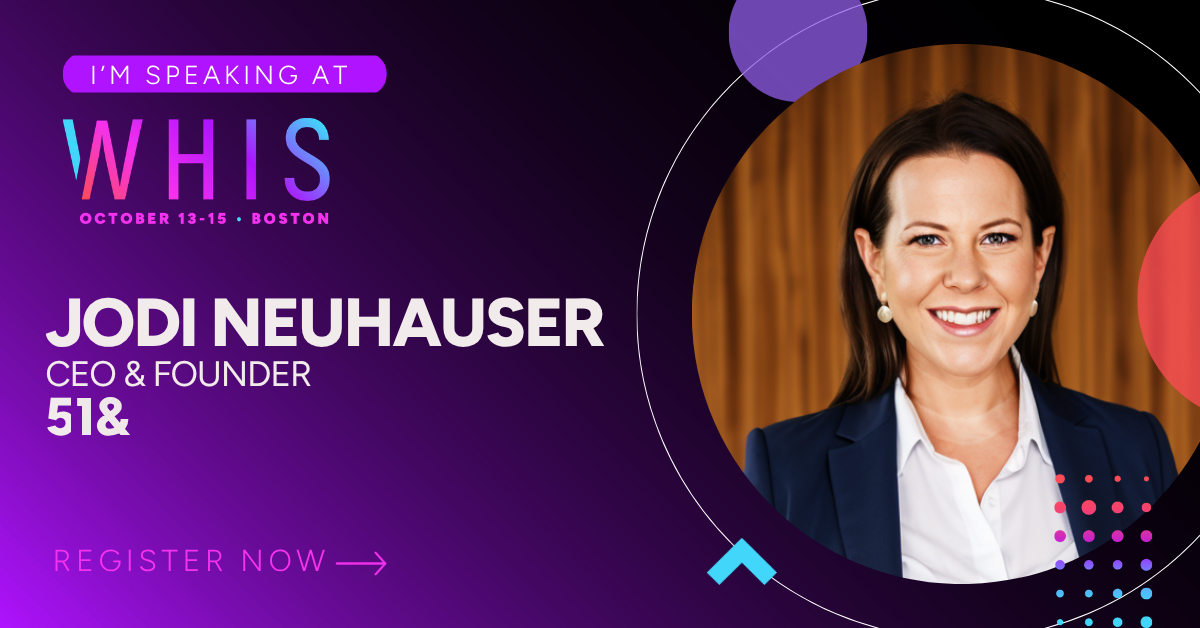
Three signals a role is about to existThere’s no dashboard that tells you a company is six weeks from needing someone like you, but there are patterns. → The founder mentions the same unsolved thing more than once. Once is venting. Twice is a role being born. I said some version of “I really need help with this” to at least four people before I ever wrote a line about it publicly. Watch for these signals in communities, on LinkedIn posts and in conversations at conferences. → Something structural just changed that breaks the old, informal way of handling a problem: a funding round, a new payer contract, a state expanding coverage for something. It could also be a pivot or a new direction for a product. Any of those can turn one person’s side project into a job that needs a real owner. → A role gets posted, disappears, then reappears weeks later under a different title. That’s not a company being flaky, that’s a company admitting it hasn’t actually figured out what the job is yet, which means it’s still negotiable, and the person with the clearest definition of it often gets it. One of my favorite In Women’s Health stories is from the Chief Product and Commercial Officer at MilkStork, Tiffany Aquino. Tiffany tells the story that when she went to interview for a Product role at MilkStork, she was the one who helped the company figure out the structure of the product org and what they actually needed. Talk about creating a job for yourself! What to do when you spot one of these opportunities→ Name the pain back to them in one sentence before they’ve put it into words themselves. Not “I’d love to learn more about what you’re building,” but “it sounds like nobody owns X right now, and that’s probably costing you Y.” → Propose the first thing you’d actually do, not the title you want. “Here’s what I’d tackle in the first 30 days” is a different conversation than “I’d love to explore opportunities.” → Ask for something small enough to say yes to on the spot: a working session, a half day on the problem together. Most founders can’t say yes to a hire in that moment, but plenty can say yes to an hour. Focus on what you can give and how you can help, and then be the nudge that keeps following up with value until you get the conversation or the role. Here’s the part that’s genuinely hard about thisThis only works if you’re tracking people and problems over months, most of which go nowhere. That’s not you doing it wrong, that’s what the skill actually is, and it’s closer to scouting than applying, which means a lot of quiet watching before anything pays off. This is exactly what I’ll be talking about on the Building Your External Brain Trust panel at the Women’s Health Innovation Summit on October 13: the people who get good at this fast are the ones with a real network feeding them these signals in the first place. If you’re there, come find me after. And if you’re not, here’s your one action this week. Pick one founder or company you’ve been quietly watching, and instead of waiting for them to post something, tell them what you’ve noticed. Want to talk through your own version of this? Come to October Office Hours on the 16th if you’re an IWH Pro member, or our October networking session on the 23rd, open to the whole community. See you next week, 
Source: MyPerfectResume Networking Nation Report, survey of 1,000 U.S. workers, via HR Dive |
💡 The Reimbursement Summit is coming back. A new report comes first. Most people in women’s health know reimbursement matters. Almost none of them understand how it actually works. The next summit changes that.Reimbursement decides what care scales and what quietly disappears, and most people in this industry were never taught how it works. This three-day virtual program covers the mechanics: CPT codes, coverage decisions, payer negotiations, and the structural gaps specific to women’s health. New dates and speakers are being finalized now, and payment plans will be available when registration opens.
3 live virtual sessions · Presented by In Women's Health with Tribunus Health · New dates and speakers coming soon
New report coming soon · Early bird pricing to be announced · Payment plans available once registration opens · Group, employer and IWH community rates available |
⭐ Featured Roles Three we'd apply to this week
|
⚖️ This vs. That · Reactive vs. early signal A job alert vs. a company watchlist
Why it matters: Alerts tell you where everyone else is already applying. A watchlist tells you where a role is about to open, and gives you something specific to say when you reach out.
🤝 In the Community
|
📅 Upcoming Events Get in the room
|
P.S. Know someone who refreshes their job alerts at midnight like they’re waiting on concert presale? Forward this to them, because by the time that posting goes live, the people with a watchlist have already had coffee with the hiring manager. |
